



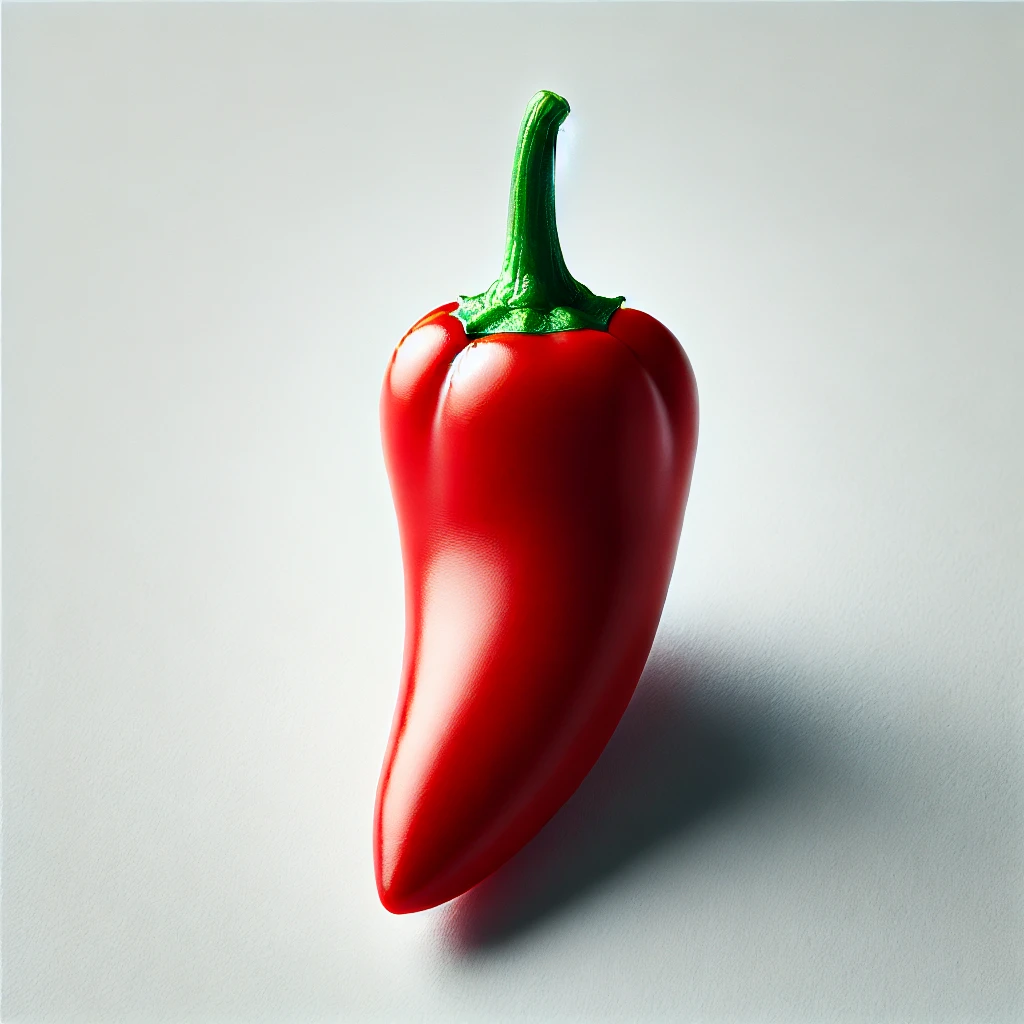

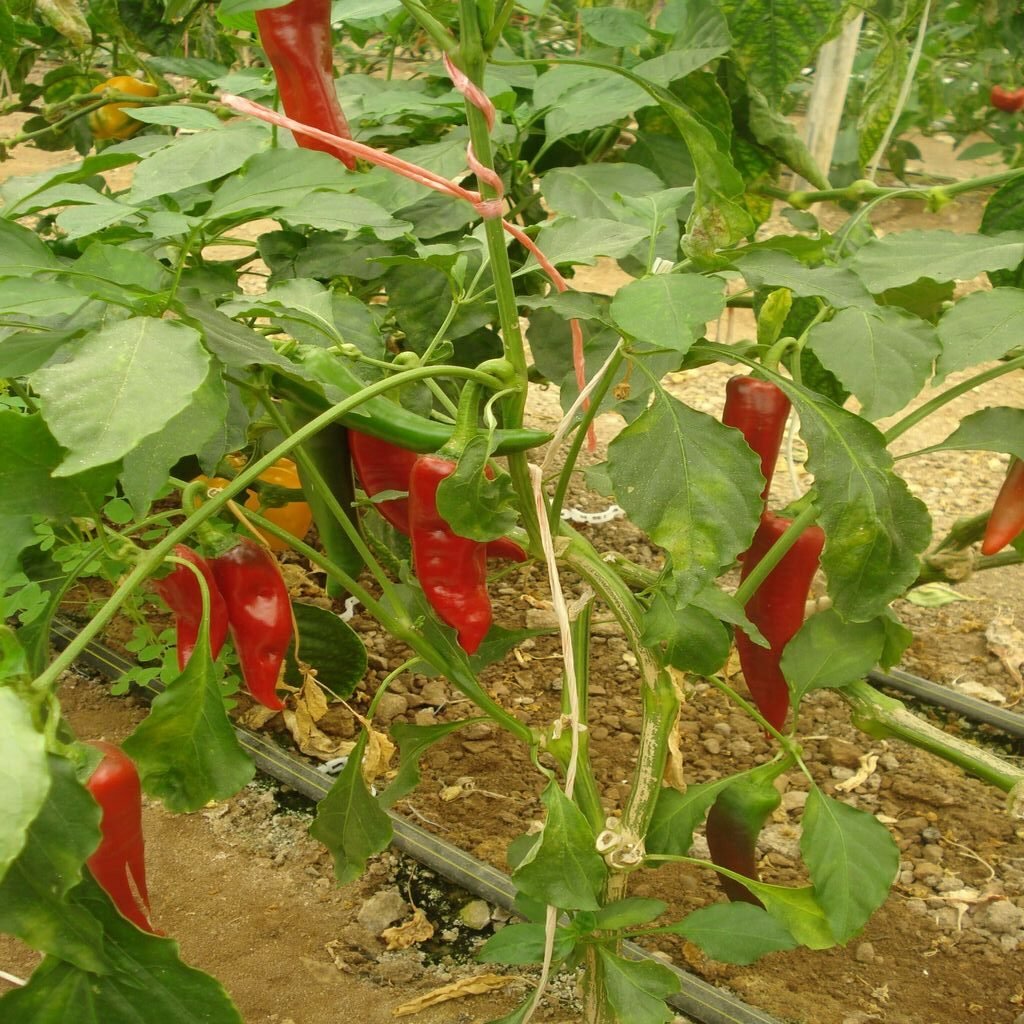
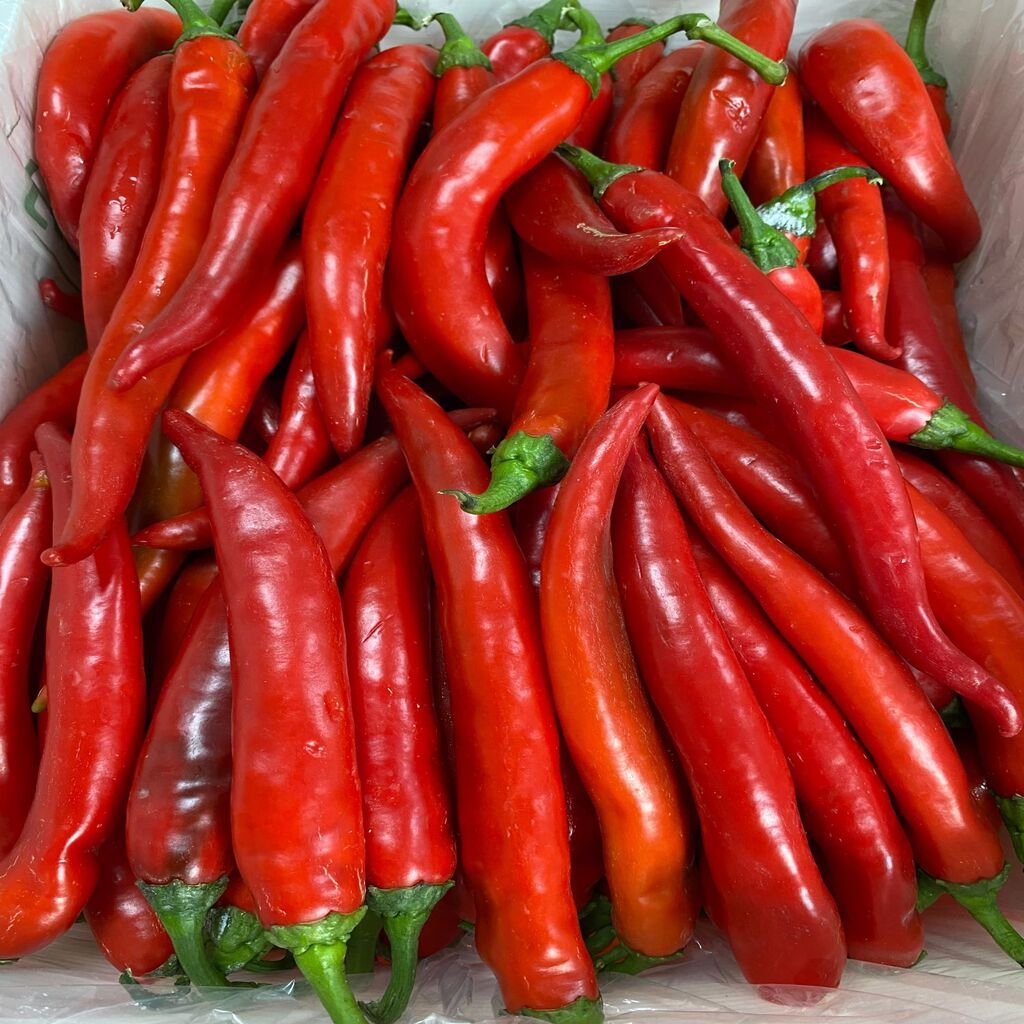



Red Bell Pepper
Red bell peppers are one of the most popular varieties of bell peppers, known for their vibrant red color and sweet, mild flavor. They are fully ripened green bell peppers, which is why they are much sweeter and more nutrient-dense. They are widely used in cooking and fresh dishes around the world.
Key Features:
-
Appearance: Red bell peppers are larger than many other types of peppers, with a smooth, glossy red skin. The flesh is thick, crisp, and juicy.
-
Flavor: Unlike the slightly bitter taste of green bell peppers, red bell peppers are sweet, tangy, and very mild, making them a favorite for raw eating and cooking.
-
Texture: The flesh is firm and crunchy, and it has a juicy, watery texture that makes it refreshing in salads or on its own as a snack.
Nutritional Benefits:
-
Vitamins: Red bell peppers are an excellent source of vitamin C, which supports the immune system, and vitamin A, which is essential for vision and skin health. They also provide vitamin B6, which is important for metabolism and brain function.
-
Minerals: Red bell peppers are rich in potassium, which helps regulate blood pressure, and folate, which is important for cell growth and development.
-
Antioxidants: They are loaded with carotenoids, including beta-carotene and lycopene, which help reduce oxidative stress and protect against chronic diseases.
-
Low in Calories: Despite their sweet flavor, red bell peppers are low in calories—about 31 calories per 100 grams.
Health Benefits:
-
Boosts Immunity: With their high vitamin C content, red bell peppers help strengthen the immune system and improve skin health.
-
Supports Vision: The vitamin A in red bell peppers is essential for maintaining healthy vision, especially in low-light conditions. It also helps prevent macular degeneration and other age-related eye issues.
-
Promotes Healthy Skin: Vitamin C helps the body produce collagen, an important protein for skin elasticity, and can help with wound healing.
-
Reduces Inflammation: The antioxidants in red bell peppers, especially lycopene, have anti-inflammatory effects, which can help reduce the risk of conditions such as arthritis, heart disease, and certain cancers.
-
Heart Health: The combination of antioxidants, vitamins, and potassium in red bell peppers supports healthy cardiovascular function by reducing blood pressure and improving blood circulation.
-
Cancer Prevention: Lycopene, found abundantly in red bell peppers, is linked to a reduced risk of cancer, particularly prostate cancer.
Culinary Uses:
-
Raw: Red bell peppers are often eaten raw, either as slices in salads or served with dips like hummus. Their sweetness and crisp texture make them perfect for fresh dishes.
-
Roasted: Roasting red bell peppers enhances their sweetness and smoky flavor. They are often used in Mediterranean dishes, salsas, or as part of grilled vegetable platters.
-
Stir-fries: Red bell peppers are commonly used in stir-fries and Asian dishes, where they contribute a sweet crunch.
-
Stuffed: Like green peppers, red bell peppers can be stuffed with a variety of fillings, such as rice, ground meat, or vegetables, and baked.
-
Soups and Sauces: Red bell peppers are often pureed and added to soups, sauces, and dips, like the classic roasted red pepper soup or ajvar (a Serbian pepper-based condiment).
-
Pickled: Red bell peppers can also be pickled and used in sandwiches, salads, or as a side dish.
Seasonality:
-
Availability: Red bell peppers are available year-round, but they are at their peak during the summer and fall seasons, when they are harvested at full ripeness.


