Key Features:
Nutrition: Rich in vitamins A, C, and K, calcium, and iron. It also contains essential oils like eugenol which have anti-inflammatory and antimicrobial properties.
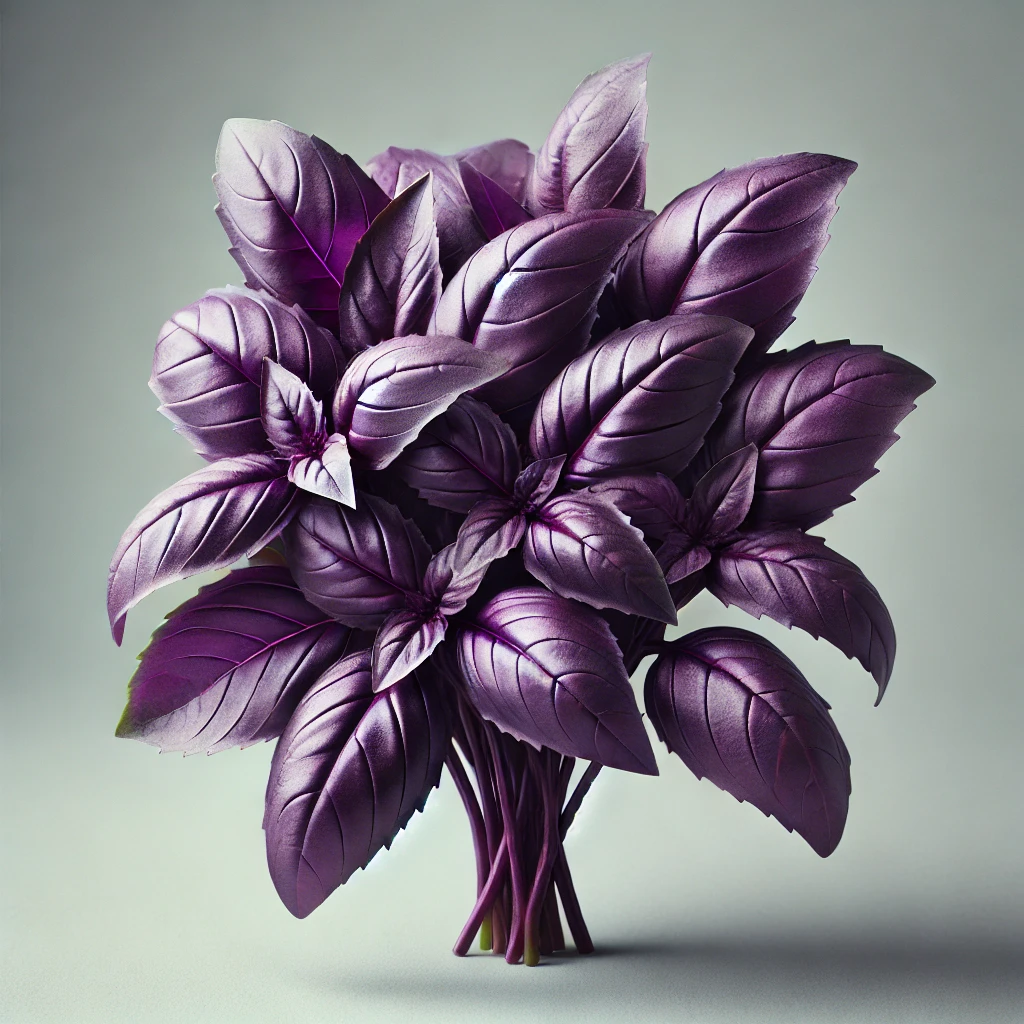
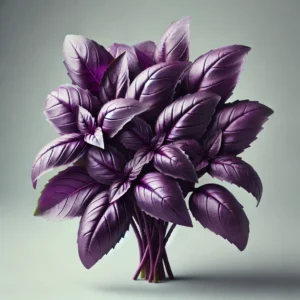
Antioxidants: Contains anthocyanins (responsible for the purple color), which are powerful antioxidants that protect against oxidative stress.
Health Benefits: Supports immune function, reduces inflammation, promotes heart health, and aids in digestion. It also has antibacterial properties.
Cooking: Used fresh in salads, sauces, pestos, or as garnish. Pairs well with tomatoes, cheeses, olive oil, and citrus. Not typically cooked, as heat diminishes its flavor and color.
Seasonality: Grows best in warm weather and is usually available fresh from spring through early fall.
Uses:
Culinary: Popular in Mediterranean and fusion dishes, herbal teas, and decorative plating. Adds a mild peppery and clove-like flavor.
Health: Used in herbal remedies and wellness drinks due to its antibacterial and anti-inflammatory effects.
Varieties:
Opal Basil: Deep purple with ruffled leaves, mildly spicy flavor.
Dark Purple Ruffles: A decorative variety with frilly leaves, often used in upscale salads.
Storage:
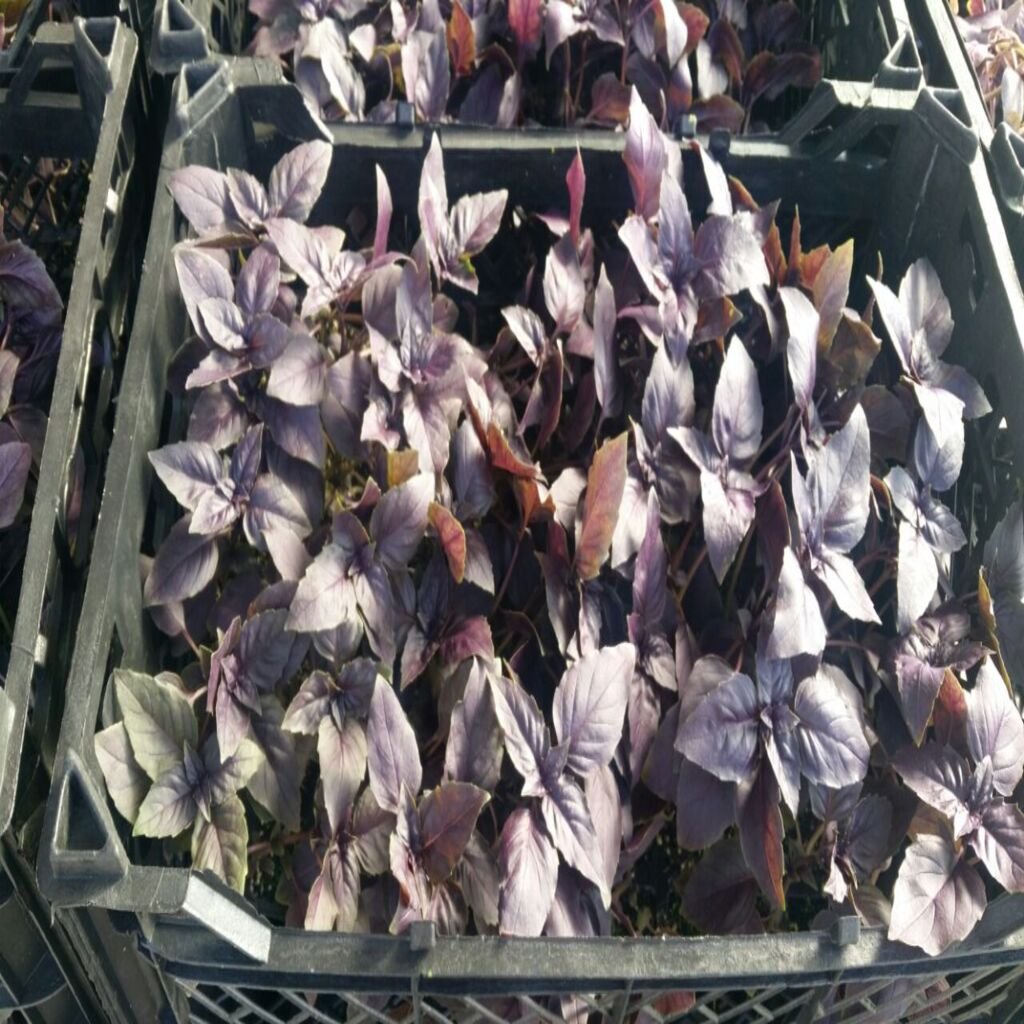
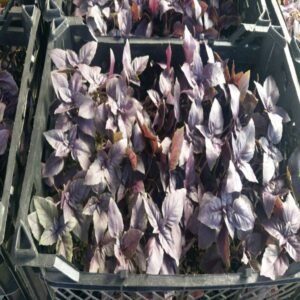
Refrigeration: Store unwashed in the fridge wrapped in a slightly damp paper towel inside a perforated bag. Best used within 3–5 days.
Freezing: Can be chopped and frozen in olive oil or as pesto, though it may lose some of its color.
Sustainability:
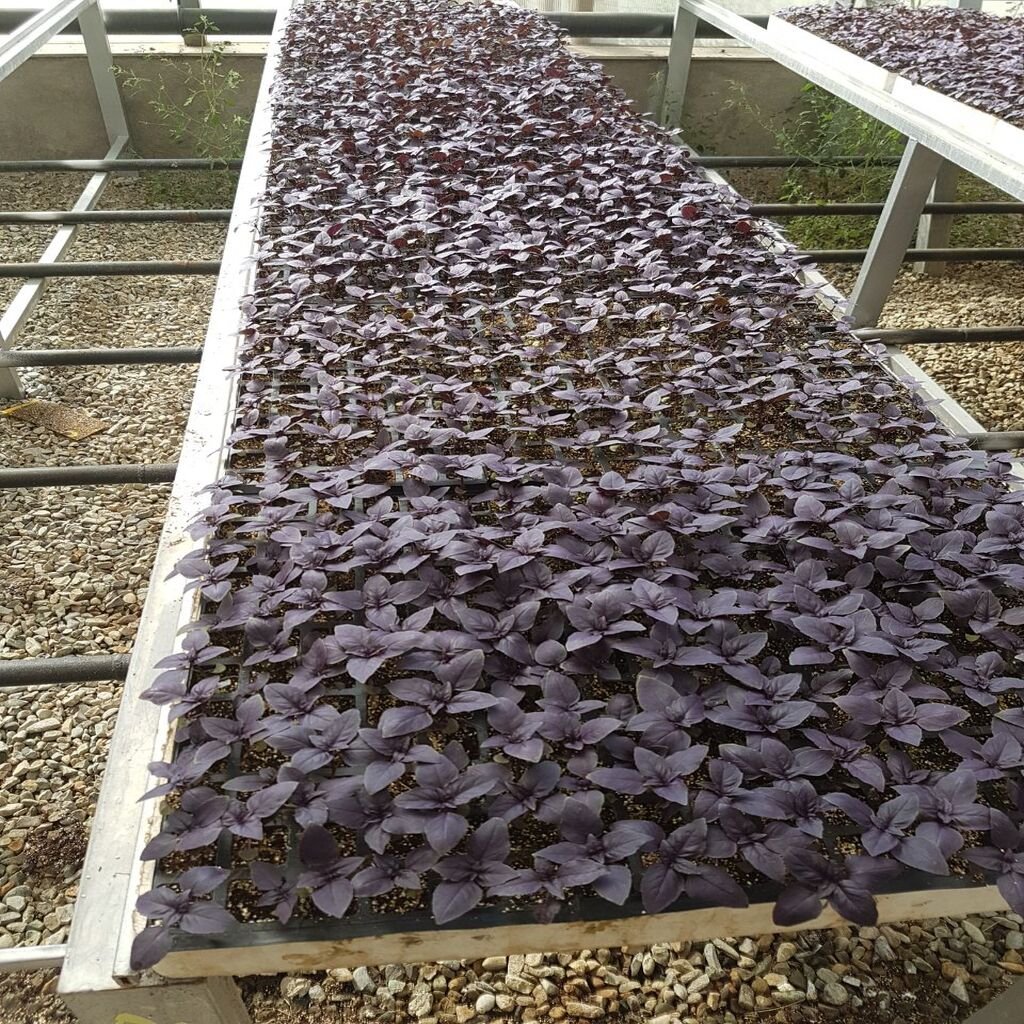
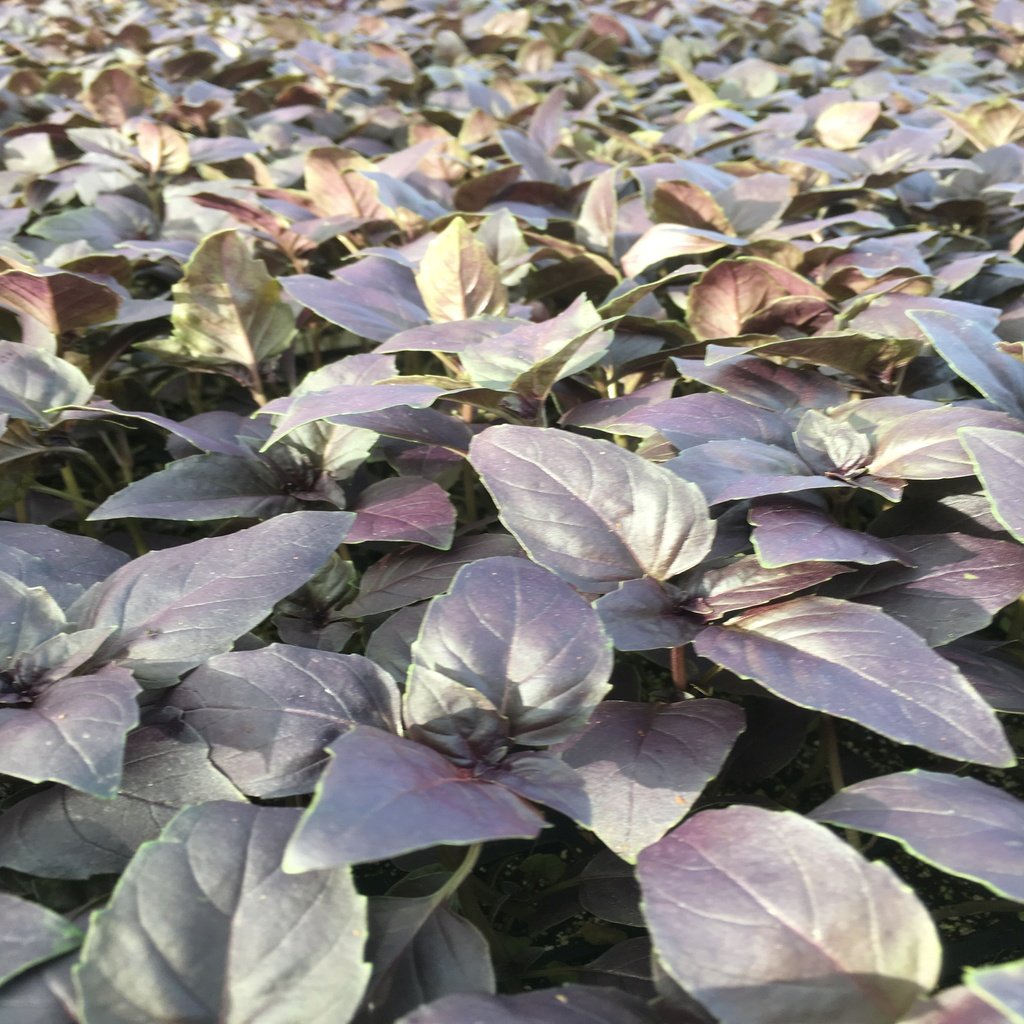
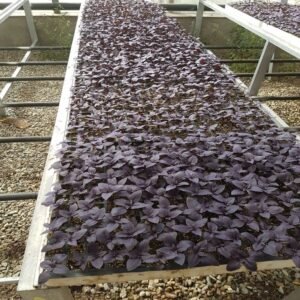
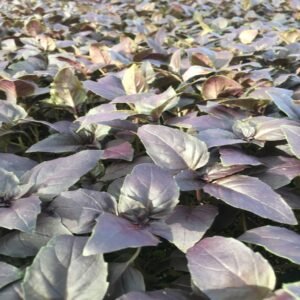
Purple basil is an easy-to-grow herb that requires minimal resources, making it a sustainable addition to gardens and farms. It is often grown organically and supports pollinators like bees when flowering.