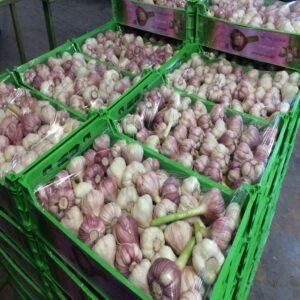
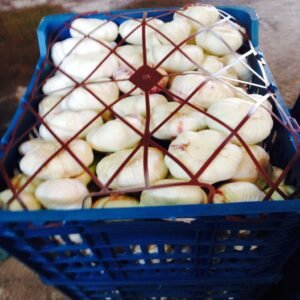
Key Features:
Nutrition: Rich in vitamins C and B6, manganese, selenium, and fiber. Garlic also contains trace amounts of various other nutrients, making it highly nutritious while being low in calories.
Antioxidants: Contains powerful antioxidants like allicin, which help combat oxidative stress and may reduce the risk of chronic diseases.
Health Benefits: Known for its immune-boosting properties, garlic supports heart health by lowering blood pressure and cholesterol levels. It may also help fight infections and reduce inflammation.
Cooking: Used fresh, minced, roasted, or powdered in a wide variety of savory dishes. Adds a distinct aroma and depth of flavor to cuisines worldwide.
Seasonality: Available year-round, with peak harvest typically between mid-summer and early fall depending on the growing region.
Uses:
Culinary: Essential in global cuisines — used in sauces, marinades, stir-fries, soups, and baked goods. Can be used raw, sautéed, roasted, or fermented (e.g., black garlic).
Health: Popular in natural remedies and wellness diets for boosting immunity, supporting cardiovascular health, and detoxification.
Varieties:
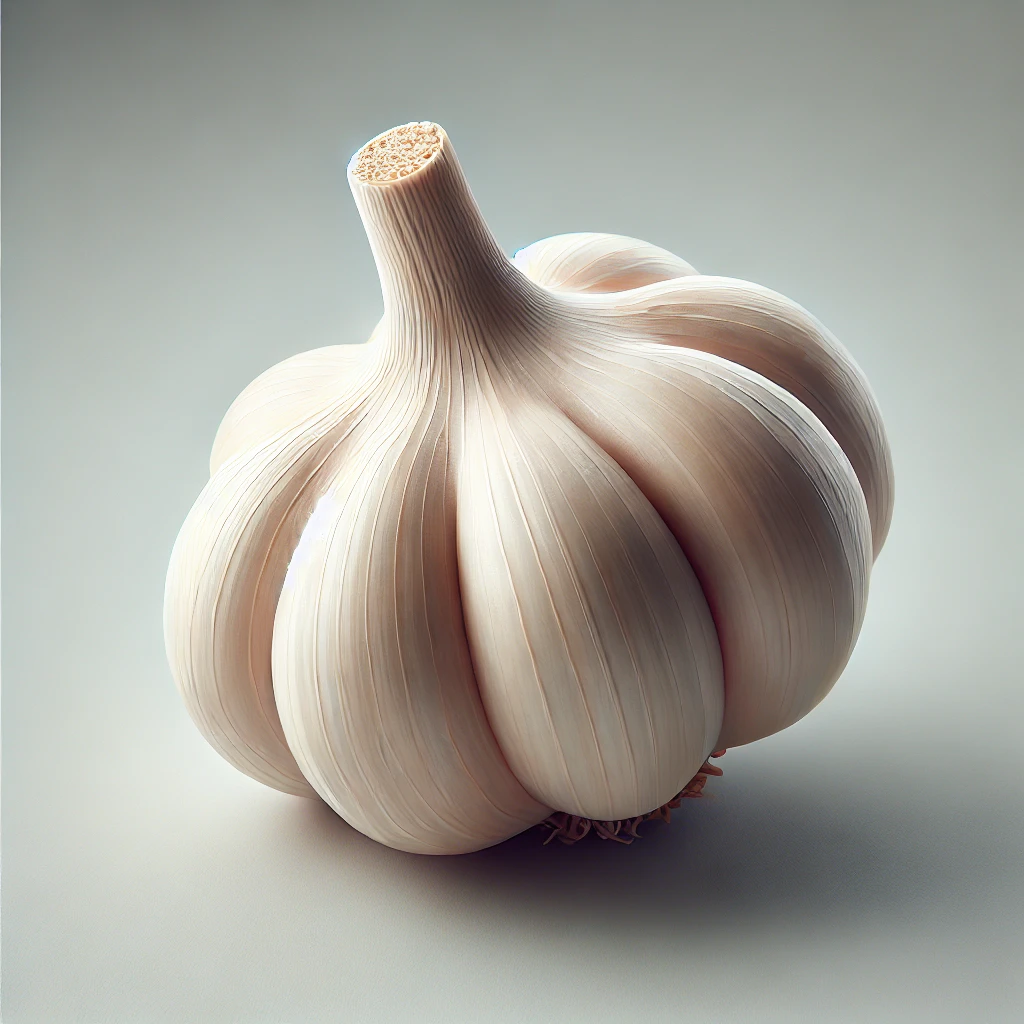
Softneck Garlic: Common in supermarkets; has a longer shelf life and a milder flavor.
Hardneck Garlic: Features a stiff stem and fewer, larger cloves; offers a richer, more complex flavor.
Black Garlic: Aged garlic with a sweet, molasses-like flavor and soft texture, used in gourmet cooking.
Storage:
Refrigeration: Not necessary; best stored in a cool, dry, well-ventilated place. Whole bulbs can last for several weeks to months.
Freezing: Garlic can be peeled, chopped, or pureed and frozen in small portions for convenience.
Sustainability:
Garlic is considered a sustainable crop due to its minimal water needs and natural resistance to many pests. It can be grown in a wide range of climates and often requires fewer chemical treatments, making it an environmentally friendly choice.